Here’s a trick: next time you’re outside, look at the concrete under your grill or doormat. That lighter rectangle is what color your whole driveway used to be. Your concrete isn’t gray — it’s dirty, and the difference after a proper surface cleaning genuinely startles people.
What We Clean
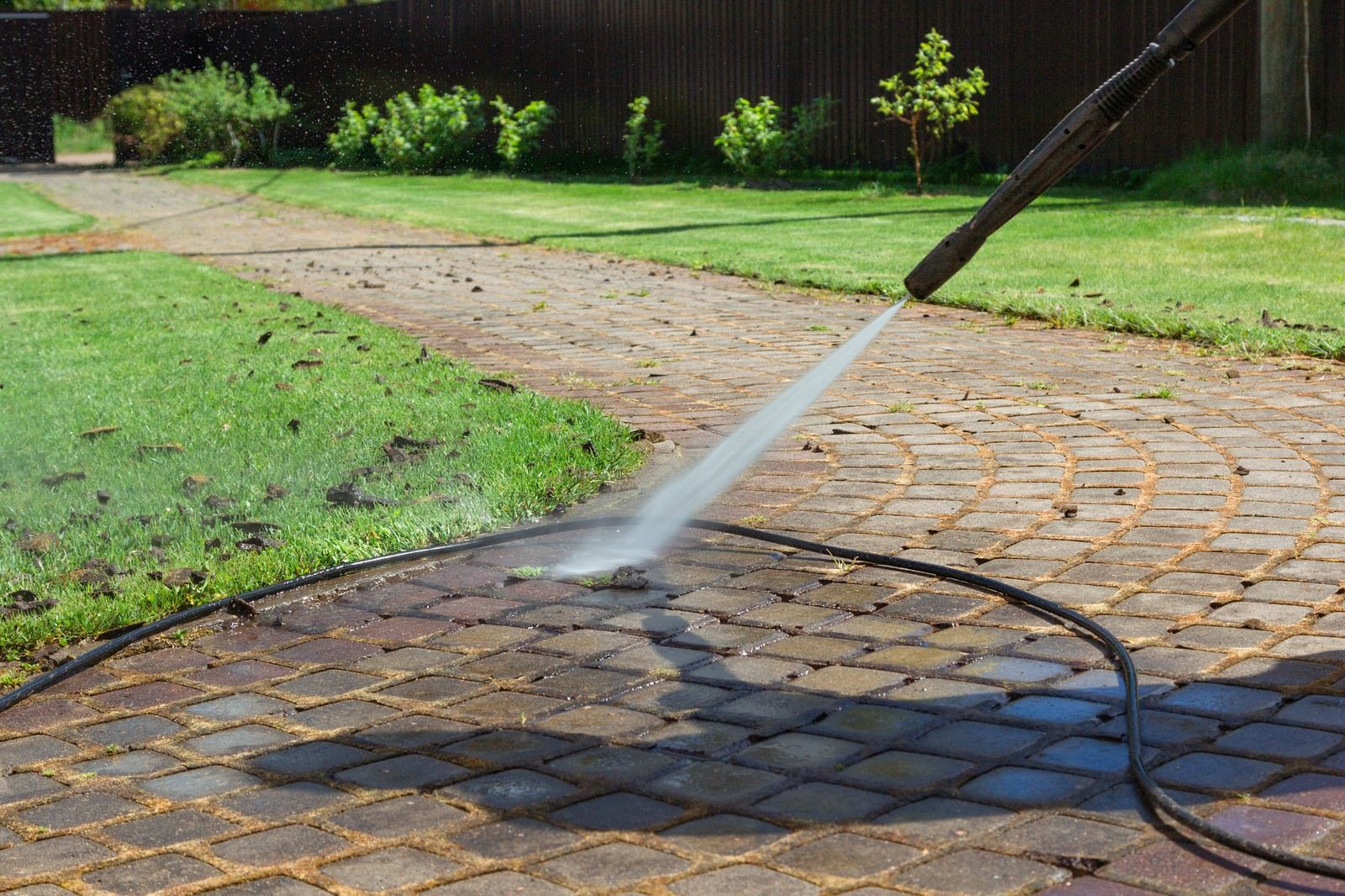
Driveways, sidewalks, front walks, patios, pool decks, curbs, steps, and garage floors. Concrete, exposed aggregate, and pavers each get their own approach — pavers in particular need controlled pressure so the joint sand stays put. If it’s flat, hard, and gray when it shouldn’t be, it’s our department.
Red Clay: The Upstate Special
Piedmont red clay is iron-oxide soil, and iron oxide is rust. When summer storms splash it onto your driveway edges, walkway borders, and curb line, it doesn’t sit on the surface like mud — it stains like rust. Plain pressure just polishes it. Getting it out takes a dedicated pre-treatment before the surface cleaner ever starts spinning, which is exactly how we run every clay-stained job. It’s the single most common “we tried everything” call we get in Greenville.
Oil, Rust, Tire Marks — Honest Expectations
Concrete is porous, so age matters. Fresh oil drips: usually gone. Years-old oil patches: dramatically lighter, sometimes a faint shadow remains. Rust from fertilizer granules or furniture: comes out with specialty chemistry. Tire scuff at the garage entry: mostly out. Paint splatter: often, but not always. We walk the slab with you when we quote and call each stain honestly — a cheap flyer that promises “like new” on 15-year-old oil is planning to disappoint you.
Why a Surface Cleaner Beats a Wand
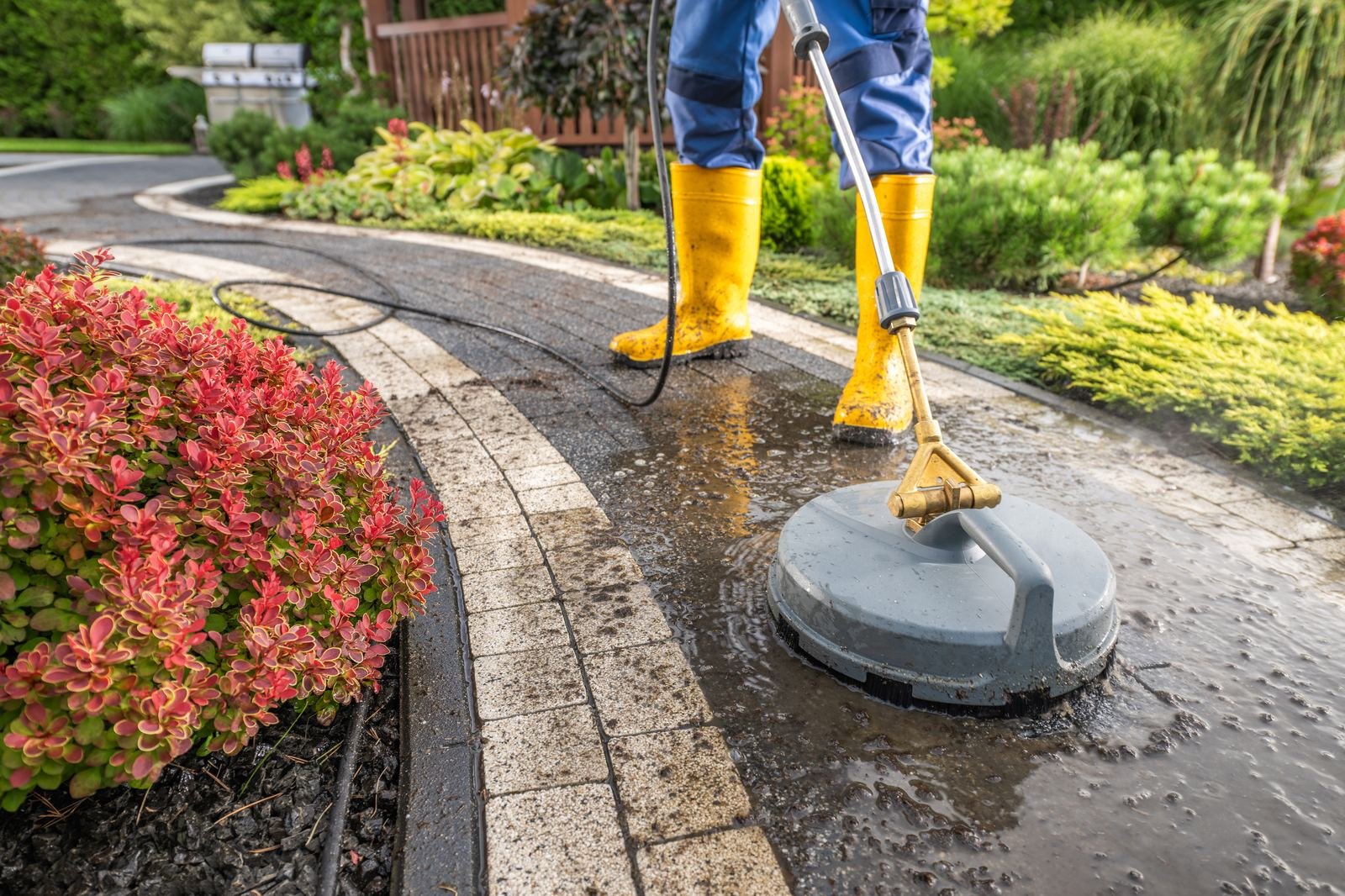
You’ve seen the driveway with pale zebra stripes across it — that’s what a handheld wand leaves behind, because no human moves a wand at a perfectly even height and speed for 600 square feet. A professional surface cleaner is a spinning, shrouded deck — think lawnmower for concrete — that cleans in wide, overlapping, perfectly even passes. No stripes, no etching, half the time. It’s the visible difference between a pro job and a Saturday rental.
Should You Seal It Afterward?
Sometimes. A penetrating sealer applied to clean, dry concrete slows the next round of staining, resists freeze-thaw spalling in Upstate winters, and makes year-two maintenance faster. It makes the most sense on newer driveways, stamped or decorative concrete, and freshly-cleaned slabs you want to keep that way. On a 25-year-old workhorse driveway it’s usually not worth the spend — and we’ll say so.
How a Concrete Job Runs
- 1. Clear and inspect. Everything movable comes off. We note oil, rust, paint, existing sealer and any spalling before water touches it, so nothing gets blamed on us afterward.
- 2. Pre-treat by stain type. Oil, rust and organic growth each need different chemistry. One product for all three is how you get a clean driveway with a dark patch where the car sits.
- 3. Surface-clean in overlapping passes. A rotary surface cleaner holds even distance and pressure — this is what produces a uniform result instead of zebra stripes.
- 4. Detail the edges. Surface cleaners cannot reach the perimeter, control joints or the garage apron. Those get wanded by hand, which is the slow part.
- 5. Post-treat and rinse. A final rinse carries loosened soil off the slab rather than letting it dry in place, and remaining growth gets treated so it does not return in six weeks.
What Concrete Work Costs Here
Most Greenville driveways land between $150 and $350. What moves it:
- Square footage — the biggest single factor.
- Surface type — broom finish, exposed aggregate, stamped concrete and pavers all clean at different speeds.
- Stain load — red clay, oil and rust all need pre-treatment, and pre-treatment is time.
- Slope and drainage — where the water goes affects containment and rinsing.
- Bundling — walkway, patio or a house wash on the same visit costs far less than separate trips.
Published numbers on the Greenville pricing page.
Where We Stop
- We will not promise to erase old oil. Grease that has soaked into porous concrete for years has gone below the surface. It lightens substantially; it does not vanish. We run a test patch so you see a real result first.
- We will not blast red clay off with pressure alone. That etches the concrete and leaves the stain. It needs the right chemistry.
- We do not seal on the same day. Sealing happens on a separate visit once the slab is genuinely dry.
- We do not repair concrete. We flag spalling and cracking; fixing it is another trade.
Driveway & Concrete FAQs
What PSI do you use on concrete?
Concrete is the one surface that genuinely wants pressure: we run a professional surface cleaner at 3,000+ PSI with overlapping passes. That is also why driveway machines rented for siding jobs cause so much damage — the pressure that is right for concrete is wrong for nearly everything else.
Will cleaning remove oil stains completely?
Fresh oil usually comes out with degreaser and hot passes. Oil that has soaked in for years lightens dramatically but can leave a shadow — concrete is a sponge. We will tell you which result to expect when we quote, not after we finish.
Can you get the red clay stains off my concrete?
Yes — this is an Upstate specialty. Red clay is iron-oxide staining, and it laughs at plain pressure. We pre-treat with the right chemistry, then surface-clean. The rust-orange skirt at the driveway edges and the splash line along walkways come out.
How long does the driveway take to dry?
Walkable almost immediately, drivable within a few hours. If we seal it afterward, keep cars off for 24 hours.
How often should concrete be cleaned in Greenville?
Every two to three years for most driveways. Homes under heavy tree cover or on busy red-clay lots often benefit from an annual walkway-and-entry refresh.
Will you get the red clay out completely?
Usually yes, and it is one of the more satisfying results we get. Clay staining responds to the right chemistry rather than to pressure — anyone blasting at it is etching your concrete and leaving the stain behind.
What about the rust stain from my irrigation?
That responds to a rust-specific treatment, and it will come back unless the sprinkler head is redirected. We will show you which head is doing it.
How long before I can park on it?
Once dry to the touch, usually an hour or two in summer. If we sealed it, that is a different answer and we will give you a specific one.
Do you re-sand paver joints?
Yes, where the wash displaces sand. It is part of doing the job properly rather than an upsell.
How often should an Upstate driveway be cleaned?
Annually if it is shaded or under trees, every other year with real sun exposure. Red clay staining is worth catching early either way.
Will the runoff hurt my lawn?
No. Beds and grass get soaked before and rinsed after, and the detergent reaching them is diluted. The grass along a driveway edge is the usual casualty of crews who skip that step.