That green tint creeping up your vinyl isn’t dirt — it’s a living colony of algae and mildew, and in Greenville’s humidity it grows back from whatever a garden hose or rental machine leaves behind. A proper house wash doesn’t blast it off. It kills it.
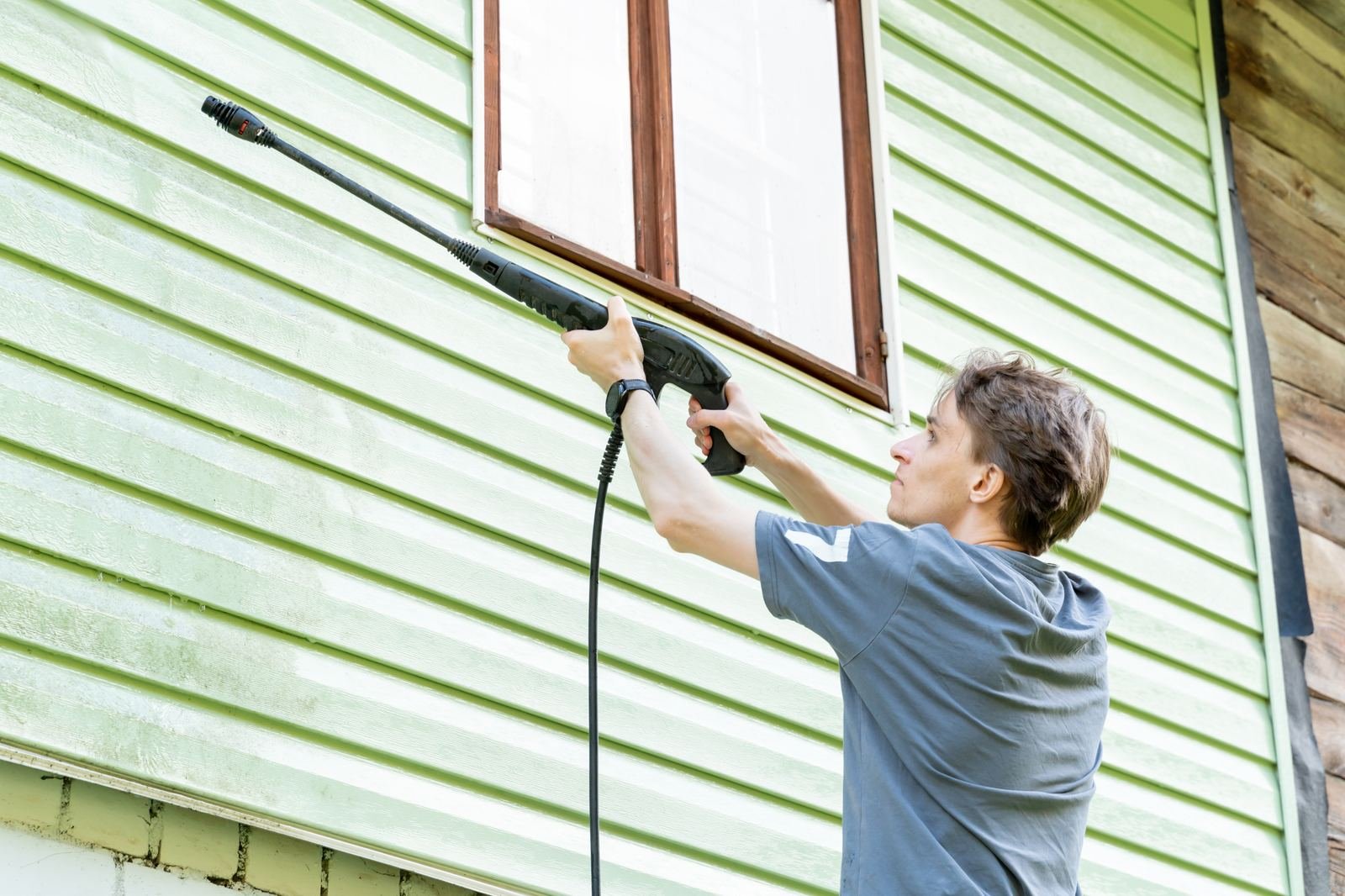
The Green Film on Your Siding Is Alive
Upstate South Carolina hands algae everything it wants: warm air, long humid summers, and shade. The north side of your house — the one that never gets direct sun — is always the worst, and if your lot backs up to trees, the growth line climbs a little higher every year. Mildew follows in damp corners under eaves and behind shrubs. Scrubbing takes the color off the surface, but the organism survives in the texture of the siding, which is why DIY washes look good for six weeks and then go green again. Killing the growth at the root is the entire point of soft washing — and the reason a professional wash holds for a year or two instead of a season.
Why We Soft Wash Houses (and Won’t Blast Siding)
Some perspective on pressure: a garden hose runs about 60 PSI. The rental machine at the big-box store runs 2,400–3,300 PSI. Our house-wash rinse? Under 500 PSI — barely more than a strong shower. The cleaning work is done by the detergent, not the pressure.
That matters because high pressure and houses are a bad combination: it cracks vinyl panels, pops J-channel trim loose, etches soft brick, chews mortar joints, strips paint off Hardie board, and — the expensive one — drives water behind the siding where it soaks insulation and grows the mold you can’t see. If a company shows up planning to clean your house with a surface-cleaner wand at full pressure, send them home.
Surfaces We Wash
Vinyl siding
The Greenville standard. Soft wash only. On older vinyl we check for oxidation first — that chalky, faded film is failing pigment, not dirt, and aggressive washing streaks it. We identify it up front and set expectations honestly.
Brick & stone
Algae and red-clay splash come off; the mortar stays put. Low pressure, correct chemistry, patient dwell time.
Hardie board / fiber cement
Common on newer Upstate builds. Soft washing preserves the factory finish that high pressure strips.
Stucco & painted wood
The most delicate surfaces we clean — extra dilution, extra distance, extra care around window seals.
What a House Wash Includes
The full exterior: siding on every side, soffits and fascia, gutter exteriors (a quick rinse — deep gutter brightening is its own service), porch ceilings, garage doors, and the foundation line where red clay splashes up after storms. Windows get a final fresh-water rinse so they dry without detergent haze. What it doesn’t include: clogs inside the gutters and roof streaks — different jobs, different chemistry, and we’ll quote them honestly rather than fold a surprise into your invoice.
A Word About Pollen Season
Every spring — late March into April — Greenville turns yellow. Pine pollen coats porches, screens, sills, and ceilings, and when morning dew hits it, it sticks like paint. Our advice, even though it costs us early bookings: schedule your wash for late April or May, after the main drop. Wash too early and you’re paying to have pollen land on clean siding a week later.
Plants, Pets, and Protection
Before any detergent goes on the house, landscaping beneath the work area gets soaked with fresh water — saturated roots don’t drink what they don’t need. Delicate beds get covered. Outlets and fixtures get bagged. When the wash is done, everything gets rinsed down again. Dogs and kids just need to stay inside while we work; everything we use is biodegradable and neutralized by the final rinse.
How a Greenville Wash Runs
Six steps, same order every time. The order is what separates a wash that holds for a year from one that looks good for eight weeks.
- 1. Walk it with you. Siding type, paint condition, oxidation, artillery fungus, window seals, and where the growth is genuinely worst. You get the honest read, including anything we cannot fix.
- 2. Soak everything below. Beds, lawn, and anything inside the splash zone get a plain-water soak. Wet foliage does not absorb.
- 3. Cover and bag. Outlets, fixtures, AC condensers, anything that should not take a drenching.
- 4. Apply top-down at low pressure. The detergent does the work. Pressure at the wall stays in the range a garden hose reaches.
- 5. Dwell. The mix needs minutes on the surface to kill growth at the root. This is the step cheap washes skip, and it is exactly why they fail by the next season.
- 6. Rinse everything. Top-down on the wall, then beds, lawn, walkways, windows and the driveway apron. The job is not done when the wall is clean.
What You’re Actually Looking At
- Green film, worst on north and shaded walls. Algae. Follows shade and moisture, which is why one elevation always looks worse.
- Black streaking below the gutter line. Runoff carrying roof and gutter debris down the wall. It does not rinse off with water alone.
- A yellow-gray haze that comes off on your hand. Pollen bound into surface grime — the Upstate special, from late March onward.
- Tiny black specks on siding and glass. Artillery fungus, thrown from hardwood mulch beds. Catch it early; the longer it sits the more becomes permanent.
- Chalky residue that whitens your palm. Oxidation, which is pigment breakdown rather than dirt. Washing removes what sits on top of it and no more.
- Orange-brown tide marks near beds and downspouts. Red clay in the runoff — see driveway and concrete cleaning.
The Upstate Pollen Calendar
Greenville’s pollen season is not a nuisance, it is the single biggest factor in when you should book. Pine pollen peaks through late March and April and coats every exterior surface in the Upstate with a yellow film that bonds rather than blows away.
Two practical consequences. First, washing at the peak means doing it twice — the film re-lands within days. For house and concrete work, late April into May, once the heaviest drop is done, is the right window. Second, the pollen film is not just cosmetic: it holds moisture against the surface and gives algae something to sit in, which is part of why untouched Upstate siding goes green so reliably by midsummer.
If you are on an HOA deadline, ignore all of that and call now. A clean house in April beats a violation notice.
What a House Wash Costs Here
Most single-story Greenville homes land between $250 and $400. Two-story homes typically run $350 to $550. What moves it:
Typical Upstate ranges shown as a guide only — not a quote. We confirm the price once we have seen the property.
- Footprint and story count — more wall, more time, different reach.
- How much growth is actually there — a seasonal film and four years of established algae are different jobs.
- Access — tight side yards, steep grade, fencing, mature foundation plantings.
- Siding condition — chalking, oxidation or failing paint means a slower, more careful pass.
- Add-ons — gutter face brightening, walkways or a driveway on the same visit cost far less bundled.
Everything we charge is published on the Greenville pricing page.
Where We Stop
- We will not pressure wash siding. High pressure drives water behind the laps and leaves marks that do not come out.
- We will not promise to restore oxidized siding. Washing removes what is on top of the chalking, not the chalking.
- We will not wash failing paint. If it is lifting, washing accelerates it. We show you and stop.
- We will not guarantee full artillery fungus removal. We get most of it on most houses; the deeply embedded specks sometimes will not come off at any pressure safe for your siding.
House Washing FAQs
Is soft washing safe for brick?
Yes — safer than pressure washing, in fact. Old mortar joints are exactly what high pressure destroys. Our house-wash mix kills the growth on the brick face and rinses off at garden-hose pressures, so the mortar never takes a hit.
How long does a house wash take?
Most single-family homes in Greenville take two to four hours depending on size, height, and how established the algae is. You do not need to be home — we just need exterior water on and gates unlocked.
How long will my house stay clean?
Typically 12 to 24 months. Because the detergent kills the algae rather than just knocking the stain off, it takes far longer to return than after a pressure-only rinse. Shaded north walls regrow fastest.
Do you use bleach on houses?
We use sodium hypochlorite — the active ingredient in household bleach — professionally diluted for siding, paired with a surfactant, then neutralized with a thorough fresh-water rinse. Plants get pre-soaked and rinsed after. It is the industry-standard method recommended for killing exterior algae.
Can you remove artillery fungus spots from my siding?
Honestly: mostly, but not always completely. Artillery fungus fires sticky spores from hardwood mulch that bond to siding like tar. Fresh spots usually release; spots that have baked on for years can leave a permanent shadow. We will tell you which yours are before we start — not after.
Will the detergent kill my plants?
No, when the beds are soaked first and rinsed after. That is a few extra minutes and it is not optional here. Nearly every plant-damage story traces back to a crew skipping it.
Do I need to be home?
Only for the walkaround if you want one. After that you are free to go. We need an outside spigot and access to gates on both sides.
When should I book around pollen season?
Late April into May for house and concrete work, once the heaviest pine pollen has finished. Washing at the peak in late March means paying to do it twice.
What if it rains that day?
Light rain after the rinse is harmless. Rain during application is not, so we reschedule — and you hear from us that morning.
Can you reach a three-story house?
Yes. Soft washing is applied from the ground with a setup that reaches high walls without putting a ladder against your gutters.
My HOA sent a letter with a deadline. Can you make it?
Usually within the week. Say so when you call and we schedule to the date, and we will send a dated invoice describing the work if your association wants proof.
Is the detergent safe around pets?
Keep pets inside during the wash and off treated surfaces until dry, typically an hour or two. After that it is fine.
What if a section still looks wrong when you finish?
Tell us before we leave and we re-clean it on the spot. Spot it later, call within a week and we come back. That is the whole guarantee.