Those black streaks running down your shingles aren’t dirt, and they aren’t “just cosmetic.” They’re Gloeocapsa magma — a bacteria that eats the crushed limestone in asphalt shingles — and every season it claims a little more of your roof.
What the Black Streaks Actually Are
Shingle manufacturers add limestone filler to asphalt shingles for weight and fire rating. Gloeocapsa magma feeds on exactly that. It lands as airborne spores, takes hold on the dampest slope — usually north-facing, or anything shaded by hardwoods and pines — and spreads downhill in the dark teardrop streaks every Greenville neighborhood knows. Left alone it doesn’t stay cosmetic: the colony holds moisture against the shingle, feeds lichen and moss that pry granules loose, and shortens the roof’s working life. On top of that, insurers have started photographing streaked roofs at renewal time.
Never — Ever — Pressure Wash a Roof
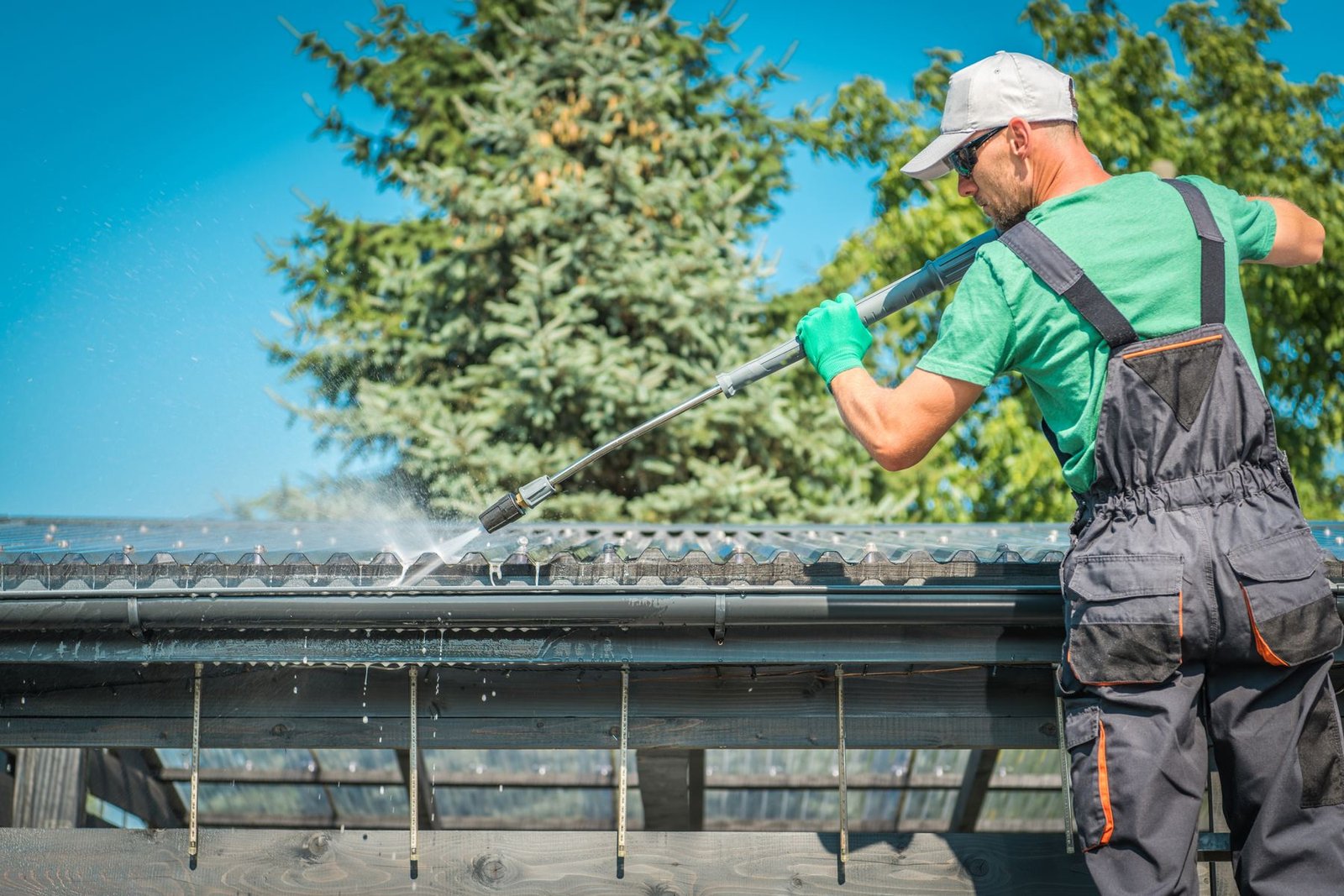
A pressure washer strips the granules that ARE the shingle’s protection. It also voids most shingle warranties on the spot. Anyone who quotes you a “roof pressure washing” is offering to take years off your roof for money.
We use the method the Asphalt Roofing Manufacturers Association (ARMA) recommends: a sodium-hypochlorite soft-wash solution applied at roughly garden-hose pressure, allowed to dwell, with no aggressive rinse. The algae dies on contact and the streaks vanish — most roofs look new before we’ve left the driveway, without a single granule sacrificed. Where the roof can be treated from ladders and edges, we stay off the shingles entirely.
Streaks vs. Moss vs. Lichen — Different Problems, Different Timelines
Black streaks die and disappear the day we clean. Moss dies immediately but releases its grip over days to weeks as it dries, then sheds with weather. Lichen — the crusty gray-green discs — is the stubborn one: it dies with treatment but can take several weeks of rain cycles to let go, and scraping it off live would take granules with it. We tell you this timeline up front so week two doesn’t feel like a mystery. Patience beats granule loss every time.
Does Cleaning Actually Extend Roof Life?
It removes the organism that holds moisture against your shingles and feeds the moss-and-lichen cycle that mechanically destroys them — so yes, in the way that matters. A cleaned and maintained roof reaches the far end of its rated life; a streaked one gets condemned early, sometimes by an insurance inspector rather than a roofer. Against a $12,000–$20,000 replacement, a periodic soft wash is the cheapest roof insurance there is.
Typical Upstate ranges shown as a guide only — not a quote. We confirm the price once we have seen the property.
How We Protect Everything Below
Roof-strength solution demands respect for what’s underneath. Landscaping around the drip line gets saturated before we start and rinsed after we finish. Downspout outlets are managed so runoff goes where we want it. Gutters get a controlled flush rather than a surprise. Pets stay in, and we’ll flag anything — koi pond, vegetable bed, rain barrel — that needs special handling when we quote.
The Upstate Roof Problem
Gloeocapsa magma — the organism behind black roof streaking — needs warmth, moisture and shade, and the Upstate supplies a long season of all three. Humid summers keep north-facing slopes damp well past sunrise, and the tree cover across Greenville County shades roof planes for most of the day while dropping organic debris into the valleys.
The other factor is time. Our warm season runs long enough that growth gets extra months a year compared with cooler climates. A Greenville roof at eight years often looks like a roof at twelve somewhere further north — which is not a sign your roof is failing early, just that conditions here are close to ideal for what is growing on it.
What Roof Cleaning Costs Here
- Single story — $350 to $550.
- Two story — $500 to $850.
- Steep, complex or heavily overgrown roofs go higher, and we say so before starting.
Roof pitch, growth load, height and perimeter landscaping are what move the number. Roof and house wash booked together costs less than two visits. Full list on the pricing page.
Where We Stop
- No pressure on a roof, ever. It strips the granules that are the shingle’s UV protection and commonly voids warranties.
- We do not replace lost granules. If the shingle has shed its mineral surface, cleaning reveals that rather than repairing it.
- We do not fix leaks. We are not roofers. If we see failing flashing or a cracked boot, we tell you and you call one.
- Moss does not vanish the same day. It dies on contact and releases over following weeks as weather carries it off. Anyone promising instant moss removal is brushing or blasting it, and both damage shingles.
Roof Cleaning FAQs
Is soft washing safe for architectural shingles?
Yes — it is the method the Asphalt Roofing Manufacturers Association itself recommends for cleaning algae off shingles. The solution is applied at roughly garden-hose pressure and the roof is never pressure washed or aggressively brushed.
Can you clean metal roofs?
We can. Metal gets a gentler dilution and a careful rinse — algae and mildew release readily from painted metal, and the finish stays intact.
How long does a roof cleaning last in Greenville?
Typically three to five years before streaks begin reappearing, longer on sunny exposures. Shaded slopes under hardwood or pine canopy regrow sooner — the same reason they streaked first.
Will my landscaping be okay?
Yes. Plants below the roofline get pre-soaked, gutters and downspouts are managed so runoff is controlled, and everything gets a thorough fresh-water rinse afterward. Roof-strength solution is treated with respect — that is most of what you are paying a professional for.
Why not just nail zinc strips up there instead?
Zinc strips only protect a couple of feet below the strip, do nothing about the algae already on the roof, and take years to show any effect. Cleaning removes the existing colony; if you love the zinc idea, it works better installed on an already-clean roof.
Does roof cleaning void my shingle warranty?
No — low-pressure chemical cleaning is the method shingle manufacturers themselves point to. Pressure washing is what voids warranties, because it strips granules.
How long do results last?
Three to five years for most Upstate roofs. Heavily shaded roofs come back sooner; slopes with good sun exposure go longer.
Do zinc strips work?
They help, and only for the area rain carries the ions across. A ridge strip does little for a dormer or a lower plane. Think of them as slowing regrowth, not preventing it.
Can you walk on my roof?
We stay off wherever possible and treat from ladders and the roof edge. If a section genuinely cannot be reached otherwise we discuss it first, and we will not walk a roof that is brittle or unsafe.
Can you do the gutters on the same visit?
Yes, and it usually makes sense — gutter debris feeds the moss in the valleys directly above it, and the ladders are already set. See gutter cleaning and brightening.
How often should an Upstate roof be cleaned?
Every three to five years. If your roof is heavily shaded, watch the north slope and call when the streaking becomes obvious rather than waiting for a set interval.