Red clay is the Upstate’s signature stain — and the reason so many Greenville driveways look permanently orange no matter how often someone runs a pressure washer over them. It is not dirt, it does not respond to force, and the wrong approach drives it deeper.
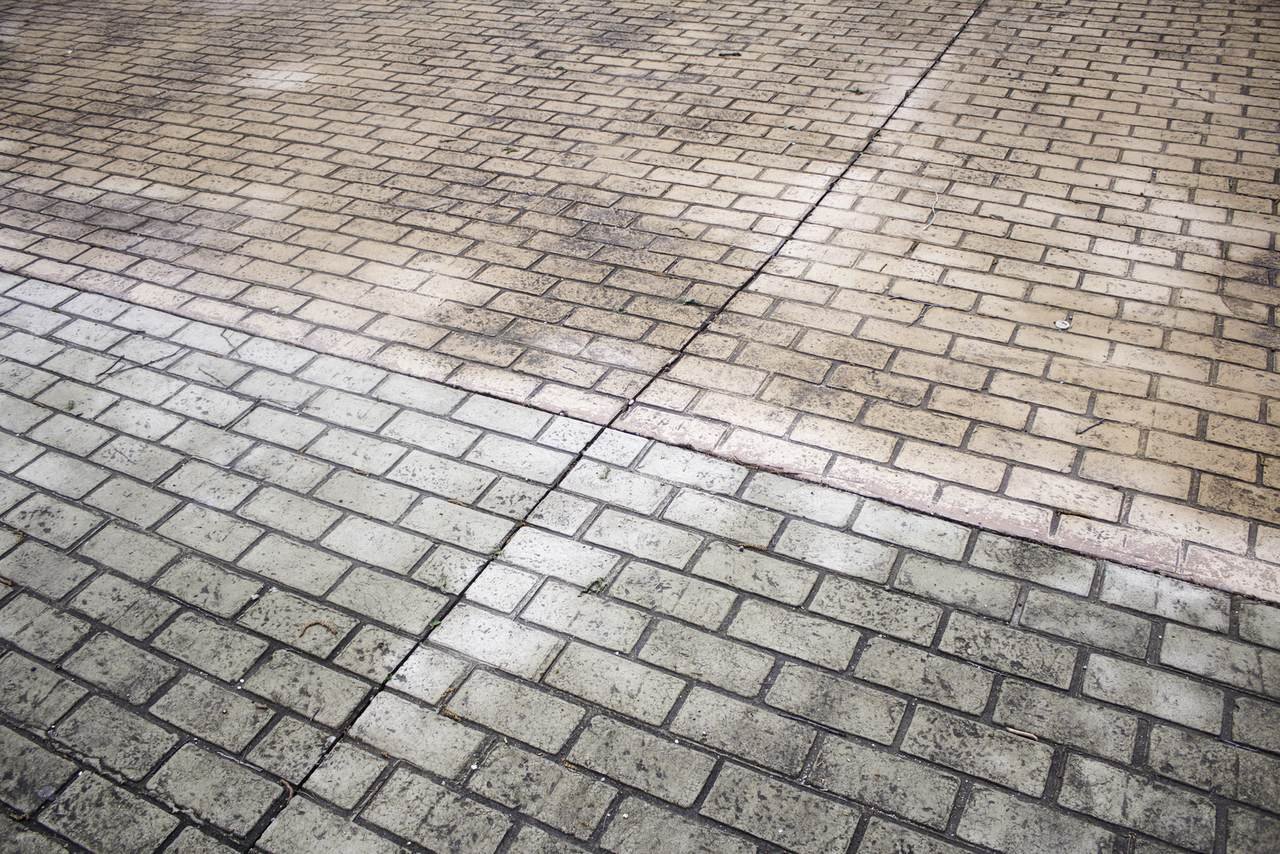
Why Upstate Concrete Stains Orange
The soil here is Cecil clay — iron-rich, fine-grained, and the reason the whole Piedmont looks the way it does. When it rains, that iron travels in runoff from beds, downspout discharge and any bare ground, and it lands on concrete. As the water evaporates, the iron oxidizes and bonds to the surface.
Two things follow. It is a chemical stain, not a deposit — which is why scrubbing and pressure move it around rather than off. And it recurs wherever the source keeps supplying it, so cleaning without addressing drainage means doing it again next spring.
Where It Shows Up Worst
- The low edge of a sloped driveway, where runoff concentrates before it leaves the slab.
- Below downspout discharge — usually the darkest patch on the whole surface.
- Along bed borders, especially where mulch has thinned and bare clay is exposed.
- Around irrigation heads, if the water source carries iron. That fans a stain in the exact arc the head throws.
- On pavers and stamped concrete, where the texture holds it more stubbornly than a broom finish.
How It Actually Comes Off
Iron staining responds to an oxalic-acid-based treatment, applied to a pre-wetted surface and allowed to dwell before rinsing. The chemistry converts the bonded iron so it can be rinsed away. Pressure alone does not touch it — what pressure does is etch the concrete surface, which leaves you with a lightly damaged slab that is still orange.
Pre-wetting matters. Dry concrete pulls the treatment deep into the pores where it does not rinse out cleanly, and that is how you get blotchy results. It is a straightforward job done properly and a mess done in a hurry.
Stopping It Coming Back
- Extend downspout discharge past the slab edge. Cheapest fix on this list and it removes the single worst source.
- Redirect irrigation heads that spray concrete, if your water carries iron.
- Keep mulch topped up so bare clay is not exposed to rain next to the driveway.
- Consider sealing on pavers and stamped concrete — it makes future staining far easier to remove. On plain broom finish it is optional.
Our approach to concrete is on the driveway and concrete cleaning page, and every number is published on the pricing page.
Red Clay FAQs
Will the orange come out completely?
Usually yes, and it is one of the more dramatic results we get. It responds to the right chemistry rather than to pressure.
Why didn’t pressure washing remove it?
Because it is a chemical stain bonded to the concrete, not a deposit sitting on top. Pressure moves it around and etches the surface — you end up with lightly damaged concrete that is still orange.
Will it come back?
Wherever the source is still supplying iron, yes. That is why we point out the downspout or sprinkler head causing it — fixing that is cheaper than washing the same slab every spring.
Is red clay staining bad for the concrete?
Not structurally. It is cosmetic. What damages concrete is people attacking it with a turbo nozzle trying to remove it.
Can you get it off pavers without wrecking the joint sand?
Yes, and we re-sand where the wash displaces it. Pavers hold the stain more stubbornly than broom finish, so they take a little longer.
Should I seal afterward?
On pavers and stamped concrete it genuinely helps — future staining sits on the sealer rather than in the concrete. On plain broom finish it is optional and mostly cosmetic.
Get a Fast, Free Quote
Send a photo of the staining and roughly the square footage, and we will give you a number — usually within the hour during business hours.
Serving Greenville, Greer, Simpsonville, Mauldin, Taylors and Travelers Rest — see all our service areas.